Pharmacological Management of Symptoms Associated with Polyendocrine Metabolic Ovarian Syndrome
By: Noelle F. Di Perna
Introduction
Polyendocrine Metabolic Ovarian Syndrome (PMOS) is an array of symptoms, such as irregular menstrual cycles and ovarian cysts, caused by a hormonal imbalance, affecting women of reproductive capacity1. Given that the exact physiological mechanisms of PMOS are widely misunderstood among the scientific community, management of PMOS is largely linked to minimizing symptoms present in affected individuals 1. This article aims to discuss current, well-researched pharmacological management strategies for PMOS.
While these strategies have been shown to be clinically effective, pharmacological management is personal and unique to each individual 2. Each individual may have different goals and symptoms they aim to tackle, requiring different management strategies 2. Beyond this, certain harmful side effects may be present in some individuals and not others, which is why consulting with a physician is of utmost importance 2. Management for PMOS is not a one-size-fits-all solution.
Combined Oral Contraceptive Pill (COCP)
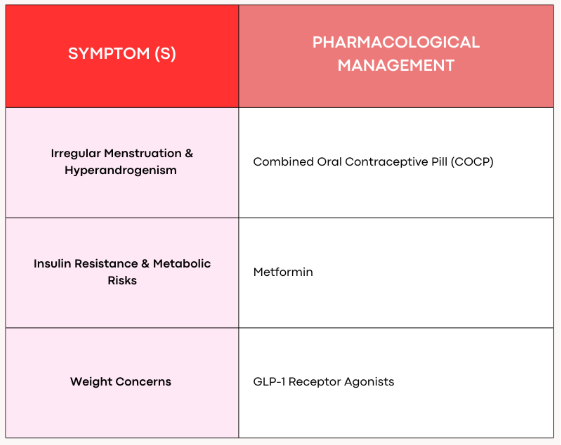
The combined oral contraceptive pill (COCP) is typically the first-line treatment for most individuals with PMOS, as the drug alleviates symptoms of irregular menstruation and hyperandrogenism (hirsutism, acne, etc.) 2. The COCP improves symptoms through multiple pathways that are impaired in those with PMOS: inhibition of excess androgen production in the ovaries, increased production of sex-hormone binding globulin, and general anti-androgenic effects 2. COCP formulations with low-dose estrogen are generally preferred to those with high-dose of estrogen as an additional dosage does not yield increased clinical benefits 2. It is important to note that COCPs are prescribed to patients who want to control symptoms of irregular periods and hyperandrogenism, not as a cure for PMOS 2.
Metformin
Metformin is used to treat metabolic effects (e.g., insulin resistance and weight gain) associated with PMOS 2. The drug works by improving insulin sensitivity in the liver and peripheral tissues, which reduces hepatic glucose production2. Studies have shown metformin to reduce body weight, improve metabolic parameters such as blood glucose concentrations and lipid profiles, and re-establish a regular menstrual cycle 2. Metformin is typically prescribed alongside significant lifestyle changes such as increased daily low-impact physical activity and diet changes.
GLP-1 Receptor Agonists
Considering the novelty of GLP-1 receptor agonists, there is limited research tied to their efficacy in individuals with PMOS 2. However, given the nature of both PMOS and GLP-1 receptor agonists, there is evidence that the drug can be considered to manage symptoms of weight gain and insulin resistance present in affected individuals 2. GLP-1 receptor agonists are tied to adverse gastrointestinal symptoms and are not suitable for long-term usage 2.
Bibliography
- John Hopkins Medicine. Polyendocrine Metabolic Ovarian Syndrome (PMOS) [Internet]. John Hopkins Medicine. 2025. Available from: https://www.hopkinsmedicine.org/health/conditions-and-diseases/polycystic-ovary-syndrome-pcos
- Ee C, Tay CT. Pharmacological management of polycystic ovary syndrome. Australian Prescriber. 2024 Aug 19;47(4):109-12.